
 (312) 224-8620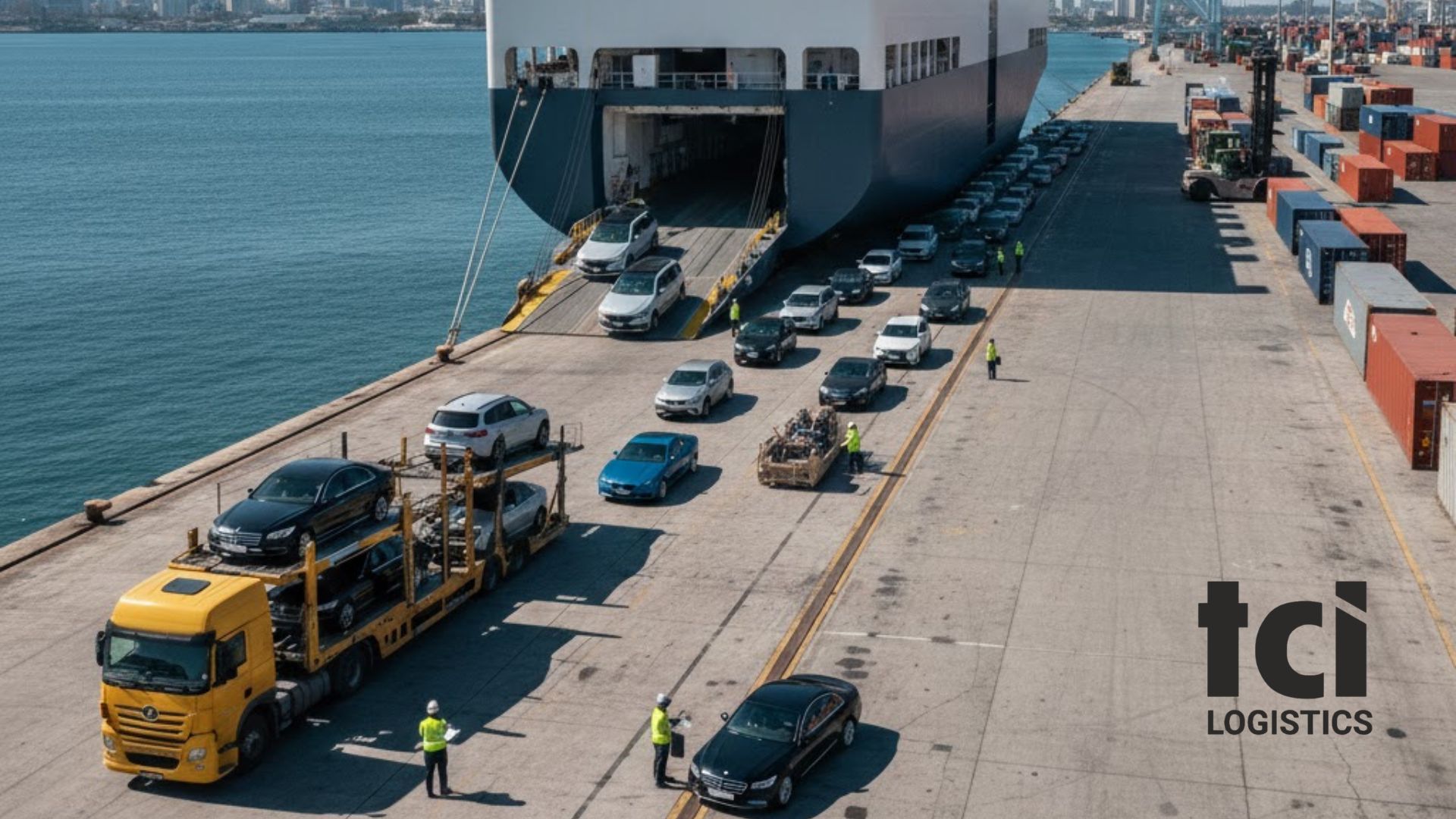
Port delivery is where most well intentioned plans break. Not because the customer did not care, but because ports run on strict cutoffs, credentialed access, and cargo handling rules that do not bend for late paperwork or a driver who cannot start the car. If you want the simplest way to think about it, the port is not a parking lot. It is a controlled industrial site with its own chain of custody. This guide walks you through that chain step by step so your vehicle is accepted cleanly, documented correctly, and protected from avoidable fees. Most customers assume port delivery is a single moment. You arrive, hand keys, sign, and leave. In reality it is a sequence with three failure points: documents, access, and operability. Miss any one and the terminal can refuse the unit, reclassify it, or push it into a fee category you did not budget for. If your export packet is late or mismatched, you can be turned away even if the car is physically ready. The port works off a clock, and the clock starts before the vehicle arrives. Many terminals require credentialed entry. If your driver cannot legally enter unescorted, the delivery does not happen. This is where TWIC becomes a practical issue, not a theory. A vehicle that cannot start and move under its own power at the gate is often treated as inoperable. That can mean winching, special handling, and higher charges. Terminals want a fast inspection handoff. If inspectors cannot see the VIN and the exterior condition quickly, the handoff drags and the risk of disputes rises. Think of port delivery as a custody transfer from an inland transport environment to a maritime terminal environment. Up to the gate, your inland carrier is responsible. Once the unit is accepted, liability and physical custody end for the inland carrier. From that point, the vehicle is subject to terminal handling, a phase where the port staff or stevedores move the unit inside the facility, stage it, and position it for loading. This difference matters because customers often believe the person they paid is still responsible inside the terminal. They are not. If something is unclear at handoff, you want the record to be clean and complete at that exact moment. This is not a generic tips list. It is an operators guide built around what actually causes rejections and fees. You will learn how to manage export paperwork timing, how to prepare a vehicle for fast terminal acceptance, how TWIC affects access, and how to secure the one document that proves the terminal took custody. The focus is on U.S. export workflows used for both RoRo and containerized car shipping. High stakes precision begins with timing. Many export workflows in the United States follow a practical standard: the terminal and the export process want your documents ready at least 72 hours, or three business days, before the vehicle can be loaded onto a vessel. Treat this as your document ready anchor. If you plan around it, you avoid the most common last minute failure. If you feel tempted to push paperwork until the last day, assume you will pay for it. Terminals and export controls reward planning and punish optimism. Vehicle prep is not about vanity. It is about fast inspection, safe handling, and predictable loading. Clean means the VIN is legible, the exterior is free of heavy mud which can hide damage or violate bio security rules, and the inspector can complete a condition report in under five minutes. If they cannot see the paint, they cannot sign the handoff. Before the vehicle leaves your possession, take photos that make disputes easy to resolve. Do not take artistic shots. Take proof shots. Capture all sides, roof, windshield, odometer, the VIN plate, wheel wells, and any existing scratches. Date stamp is helpful, but clarity is everything. If your vehicle has a battery disconnect or an aftermarket anti theft kill switch, the instructions must be taped to the dashboard. If the port workers cannot start it, it becomes an inoperable unit instantly, often incurring heavy winching fees and special handling delays. TWIC is not an optional detail if your terminal requires it. It can decide whether your delivery happens or fails at the gate. Here is the reality check: the port does not care if your driver is a nice guy. If he does not have the credential, he stays at the gate. We prefer to use TWIC certified drivers to avoid the escort fee, which is essentially a tax on bad planning. Once the terminal accepts the vehicle, you are in terminal handling territory. The vehicle may be driven by terminal staff, staged in a yard, moved multiple times, and positioned for loading. This is normal. Your best protection is a clean condition handoff and the right receipt documents. If damage is discovered later, the timeline becomes the argument. The earlier you lock the condition record, the less room there is for confusion. RoRo is efficient, but it is strict. Vehicles must be drivable, safe, and simple to move. The one quarter tank standard is not negotiable in practice. Too much fuel increases risk and can trigger refusal. Too little fuel can cause the vehicle to stall during yard moves. One quarter tank is the sweet spot that keeps the unit safe and operable. Container shipping changes the delivery logic. In many cases the vehicle is delivered to a warehouse or container freight environment for loading, then the sealed container enters the terminal. Your risk shifts from drivable staging moves to loading quality and securement. That means your prep must focus on clear instructions and hardware readiness. Cleanliness is not only about inspection speed. Some destinations enforce bio security checks at arrival ports. Australia and New Zealand are the classic examples. Their inspections can focus on organic debris that hides in wheel wells, undercarriage seams, and suspension components. If your vehicle arrives with mud, grass, or soil packed underneath, it can be rejected, delayed, or sent for expensive cleaning. That cost tends to arrive when you least want surprises. A vehicle can look clean from the side and still fail bio security inspection because the underside was ignored. Five minutes with a pressure rinse can prevent weeks of delay later. These are not rare edge cases. They are the recurring patterns that create demurrage, storage charges, and re delivery costs. Fix them once and you remove a large part of the risk. Once the vehicle is accepted, your job is not done. You move from physical control to documentation control. The next risks are administrative: storage, missed sailings, and confusion about status. Your defense is a clean paper trail and proactive confirmation. Most disputes are not about dramatic damage. They are about uncertainty. A scratch that existed before handoff becomes an argument because the condition record was incomplete or the photos were not clear. A missed sailing becomes a blame game because the cutoff was misunderstood. The operators approach is simple: reduce ambiguity early, and you rarely need to argue later. Port delivery can be done by the customer, but most delays happen when roles are unclear. At TCI, we treat port delivery as a controlled workflow: documentation timing, inland movement, terminal policy alignment, and acceptance proof. If you want a single team that aligns these steps, review our shipping services to match the right method to your route and destination. If you want a quick starting point, use our free rate tool to estimate inland transport and ocean shipping based on your origin, destination, and vehicle type. You can access the shipping calculator and then we will confirm the final plan once we review your documents and timeline. Every port has its own operating rhythm, but the fundamentals are stable: documentation must be early, access must be credentialed when required, and the vehicle must be ready to be inspected and moved quickly. If you treat port delivery like an airport check in, you will be fine. If you treat it like a casual drop off, you will eventually pay for it. Plan for at least 72 hours, three business days, before loading, then confirm the exact cutoff with your port and broker. No more than one quarter tank, which is the standard safety limit for RoRo and container workflows. If the terminal requires TWIC for unescorted access, a TWIC certified driver is the safest plan, otherwise you may need an escort and added fees. The signed dock receipt, because it proves the terminal accepted custody and the inland contract is fulfilled. Tape clear start instructions to the dashboard, because if port staff cannot start it, it is treated as inoperable and winching fees can follow.A High Stakes Operators Guide That Prevents Delays Fees and Rejections
Why port delivery fails
Failure point 1 Documents
Failure point 2 Access
Failure point 3 Operability
Failure point 4 Condition verification
What the port handoff really is
What this guide covers
Document timeline and the 72 hour rule
Phase 1 Pre transport 10 to 14 days out
Phase 2 The 72 hour handoff
Phase 3 Day of delivery
Vehicle prep that prevents delays
Prep essentials that ports actually enforce
Condition documentation you control
Operator tip for modern vehicles
TWIC access and the reality check
How to treat TWIC as an operational requirement
Terminal handling and custody shift
What it covers at the terminal level
RoRo readiness one quarter tank standard
RoRo specific readiness checks
Container delivery differences
Container workflow checkpoints
What to ask before you commit to container
Clean underside and bio security ports
Clean underside standard that prevents rejection
Common mistakes that trigger fees
2026 port delivery checklist
Use this checklist as your gate ready script
What to do after drop off
Post drop actions that protect you
How disputes usually happen
How TCI supports port delivery
Where customers benefit most
A practical way to price it fast
Final reality check before you schedule
FAQ
How early should export documents be submitted before vessel loading
How much fuel should be in the vehicle for port delivery
Do I need a TWIC card to deliver a car to a U.S. port
What is the most important proof after the vehicle is dropped at the terminal
What if my vehicle has a kill switch or battery disconnect