
 (312) 224-8620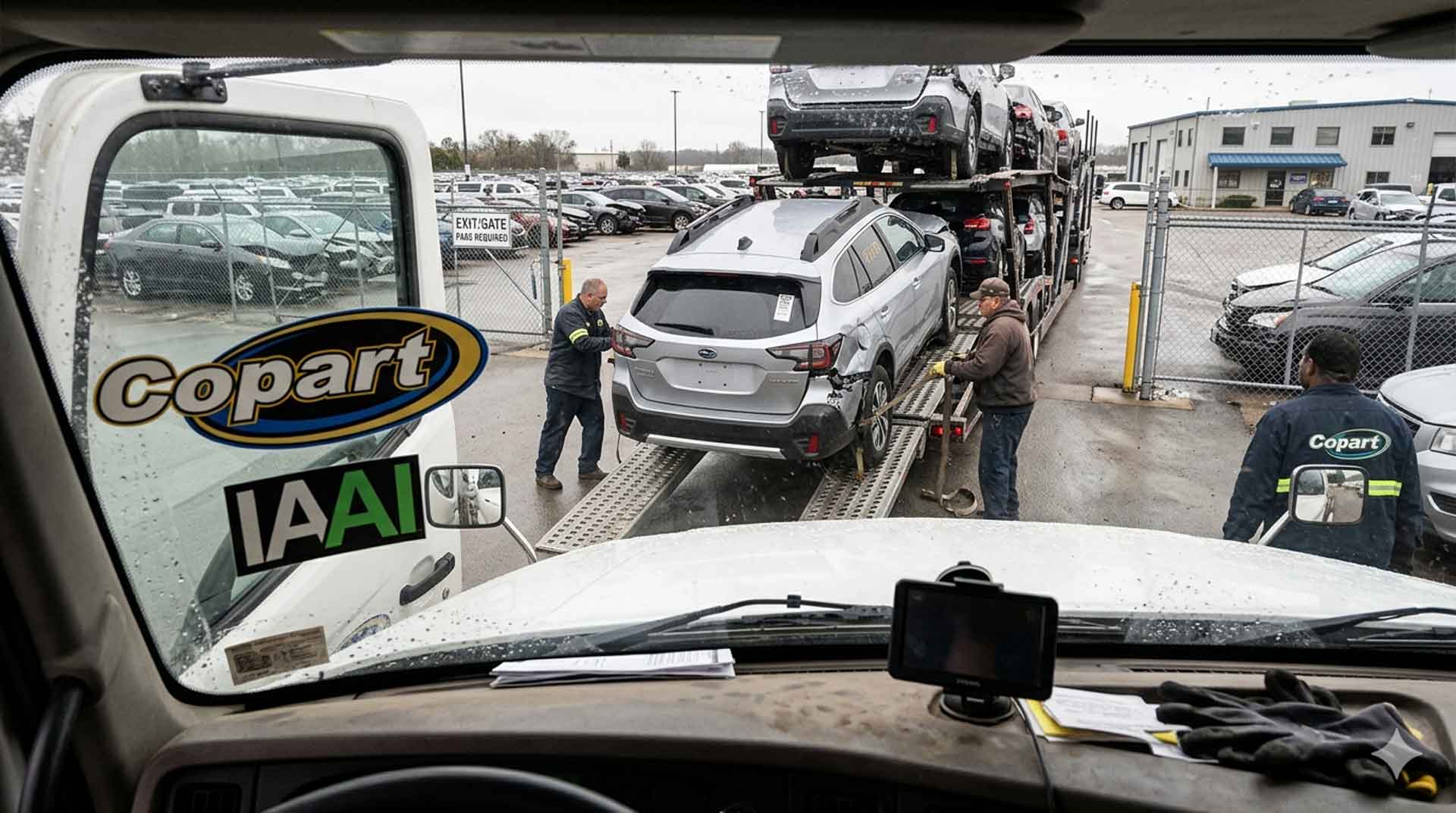
Winning a vehicle at Copart or IAAI is the easy part. Getting it home is where new bidders lose money and margin every week. Auction car shipping has its own rhythm: gate passes, storage deadlines, buyer letters, and carriers who know how to load a wrecked or inoperable vehicle without adding damage. This guide walks dealers, rebuilders, and private bidders through every step of the process in 2026, with practical numbers, common fees, and the paperwork that keeps your purchase on schedule. Use it before you place your next bid and you will save days, dollars, and plenty of frustration at the gate.
How auction car shipping works
Bottom line: auction car shipping is a regulated pickup from a licensed salvage yard, not a casual curbside collection, so it starts with paying the invoice and authorizing a carrier on your buyer profile. Copart and IAAI release a vehicle only to a motor carrier listed on the buyer account, and the driver must present a gate pass tied to your lot number. The clock starts the moment you win, which is why seasoned bidders line up a carrier before they place the final bid.
Defining auction car shipping
Auction car shipping is the process of moving a vehicle purchased at an online or in-person auto auction from the seller's yard to the winning bidder's chosen delivery point, typically using a licensed interstate motor carrier.
Who can legally pick up your car
Only a motor carrier with an active MC number, current insurance, and a buyer authorization linked to your account can remove a vehicle from a Copart or IAAI yard. Private pickups are possible with the right documents, but most bidders rely on a professional carrier because salvage yards do not load private trailers the way an auction loader does.
Picking up from Copart yards
Bottom line: Copart releases vehicles during posted yard hours only, requires a current gate pass, and starts charging storage quickly after the free period ends. The system is engineered for volume, which means a delay at your end rolls into extra fees on Copart's invoice.
Gate passes and buyer fees
A Copart gate pass is generated once the invoice is paid and remains valid until the scheduled pickup date. Late payment usually triggers a relist fee and, in some states, a penalty that wipes out a full afternoon of profit on a fix-and-flip.
Yard hours and appointment rules
Copart yards open early and close in the mid-afternoon in most states, with Saturday hours limited or unavailable. A dispatcher who is familiar with local Copart locations will often secure a same-day or next-day pickup when the paperwork is clean.
Transporting from IAAI locations
Bottom line: IAAI operates similarly to Copart but enforces its own buyer letter rules, identification standards, and preferred carrier list, so carriers who work both auctions fluently save you the most time. Any bidder who switches between platforms benefits from a transporter that speaks the quirks of each yard.
Buyer letters and gate authorization
IAAI uses a buyer letter that names the authorized carrier and lists each lot. The carrier must present it at the gate, along with a driver ID that matches the name on the letter. Missing or outdated letters are the single most common reason IAAI loads are sent home empty.
Public versus licensed buyers
Some IAAI inventory is restricted to licensed dealers, and some is open to the public. Your carrier should confirm the class of your lot before dispatch, because a public-buyer vehicle still follows commercial release rules once a professional transporter shows up.
Fees, gate passes, and storage deadlines
Bottom line: auction yards start charging storage a few days after the sale, and those charges can surpass the transport bill on low-value lots if nobody acts. Timely booking is the difference between a profitable week and an embarrassing call to the accountant.
Typical storage windows
Both Copart and IAAI offer a short grace period measured in business days, then apply a daily storage fee that escalates for older inventory. Weekends count against most accounts, so a Friday win without a Monday pickup usually burns two days of fees.
Late payment and relist fees
Failure to pay within the invoice window triggers late fees and, if it continues, the lot gets relisted and your deposit is forfeited. A carrier with a fast dispatch desk acts as an informal backstop by keeping you aware of the clock.
Open versus enclosed for auction vehicles
Bottom line: most salvage and rebuildable vehicles travel on open carriers because cost matters more than cosmetics, while collector, exotic, and running-and-driving auction wins often justify an enclosed trailer. The deciding factor is the repair budget relative to added transport cost.
When open transport makes sense
Open transport is efficient, widely available, and usually the most cost-effective option for copart and IAAI wins with visible damage. Road grime and weather rarely matter on a vehicle already marked for bodywork.
When enclosed earns its price
Enclosed carriers protect paint, glass, and unsecured interior panels on cars that still qualify as luxury, exotic, or classic. A deeper comparison of methods lives in the open versus enclosed car shipping breakdown, and it is worth a read before booking a high-dollar auction win.
Non-running and damaged vehicle handling
Bottom line: wrecked, flood, and non-running auction vehicles require carriers with winches, forklift access, and drivers trained to load without rolling wheels, which is a different skillset from standard highway transport. Never assume a generic carrier will show up with the right equipment.
Winch, forklift, and dolly loads
A winch pulls a car onto the trailer when it cannot move under its own power but still has working brakes. A forklift is used when the wheels are missing, locked, or collapsed. Tow dollies are rare in auction transport because they add damage risk on already fragile vehicles.
Flood and burn damage
Flood vehicles may leak fluids and burn units can shed debris, so carriers often charge a surcharge and require extra protective equipment. For a deeper primer on preparing these units, the inoperable auto transport service page outlines the loading options available.
Cost factors for auction transport
Bottom line: the final price on auction car shipping reflects distance, vehicle condition, seasonality, yard access, and how tight your pickup deadline is, far more than any single line item on a broker's quote. Bidders who understand the drivers bid smarter.
Distance and route density
High-traffic lanes between major auction hubs and metro areas are cheaper per mile than remote routes because carriers fill trailers faster. A rural delivery may add a pickup surcharge or require a hand-off at a nearby terminal.
Condition of the vehicle
Running-and-driving wins cost less to ship than non-running units of the same size because loading is faster and safer. Vehicles with missing wheels or broken frames always attract an additional handling fee.
Seasonality and weather
Late fall and early spring bring capacity pressure from snowbird moves and post-holiday relocations, which pushes auction transport prices up. For context on seasonal pricing dynamics, the 2025 shipping cost and regulations overview is a useful reference.
Quote shopping without getting burned
Bid-board quotes change constantly, and a rock-bottom offer often collapses before a driver is assigned. Favor carriers that quote with an active driver in mind rather than a theoretical lane rate, and compare at least three recent quotes within twenty-four hours of pickup. Stable pricing protects resale margin on rebuildables and keeps deal math honest.
Documents winners must have ready
Bottom line: your carrier cannot collect the car without the complete document set, and every missing page extends storage fees at your expense. Preparing the packet before pickup day is the single biggest time saver in auction car shipping.
Buyer pass, invoice, and ID
Have the buyer pass, paid invoice, government-issued photo identification, and, where required, a dealer or rebuilder license scanned and ready to email within minutes. Auction yards move fast, and a phone-in delay can cost a whole day of dispatch.
Title and state-specific paperwork
Some states require the title to accompany the vehicle in transit, while others allow the title to follow separately. For unfamiliar paperwork, the auto transport terminology glossary clears up confusing trade terms that appear on every bill of lading.
Delivery options for dealers and private buyers
Bottom line: door-to-door delivery works for most private buyers and many dealers, while terminal drop-off makes sense for high-volume rebuilders who coordinate multiple wins per week. Picking the right option trims hidden time costs as surely as it trims cash costs.
Door-to-door for private winners
Door-to-door delivery brings the vehicle to the closest safe, legal unloading point to your address. Narrow streets, low wires, and tight turns force a nearby meeting location, but most suburban and rural deliveries go straight to the driveway.
Terminal and dealer yards
Dealers and rebuilders with recurring inventory often prefer terminal or yard drop-offs because they can collect several units on one trip. A reliable transporter coordinates each lot number so paperwork matches the vehicle every time. For a quick cost snapshot before you commit, the online auto transport calculator returns a rate in seconds.
Split loads and multi-vehicle discounts
Buyers who win two or more vehicles at the same auction location can often negotiate a split-load rate, because one driver can handle multiple units from the same yard on a single gate pass visit. Coordinating bids by location is an underused strategy that compresses shipping cost dramatically for busy dealers.
Receiving the vehicle on delivery day
Meet the driver with adequate room for the trailer, inspect the vehicle against the original condition report, and sign the bill of lading only after every noted item has been verified. A bill of lading is the legal document issued by the carrier that records vehicle condition at pickup and delivery and serves as the foundation for any damage claim. Photos at delivery, taken in natural light, are the simplest evidence a buyer can produce if something is missing or damaged.
Auction car shipping FAQ
How soon after winning a Copart or IAAI auction should I book shipping?
Book the moment the invoice clears, ideally the same day. Both auctions start storage fees within a short grace window, and carriers need lead time to route a driver to the correct yard.
Can I ship a car that does not start from Copart or IAAI?
Yes, but you need a carrier with winch or forklift capability and the vehicle must be accessible inside the yard. Confirm the loading method in writing before you book.
Who is responsible for storage fees if the pickup is late?
Storage fees are billed to the buyer account at the auction, not the carrier. Choose a carrier with fast dispatch to avoid having to reimburse unexpected charges.
Is auction car shipping insured?
Yes, licensed motor carriers are required to maintain cargo insurance that covers damage during loading, transit, and unloading. Ask for the certificate before dispatch and keep a copy with your purchase records.
Do I need a dealer license to ship from Copart or IAAI?
Not always. Both auctions sell a growing share of inventory to the public in most states, though certain lots remain dealer-only. Your carrier can verify lot eligibility before pickup.
How long does auction transport usually take?
Typical transit runs two to seven days for regional moves and seven to ten days for coast-to-coast runs. Weather, yard hours, and lane density move those numbers in either direction.