
 (312) 224-8620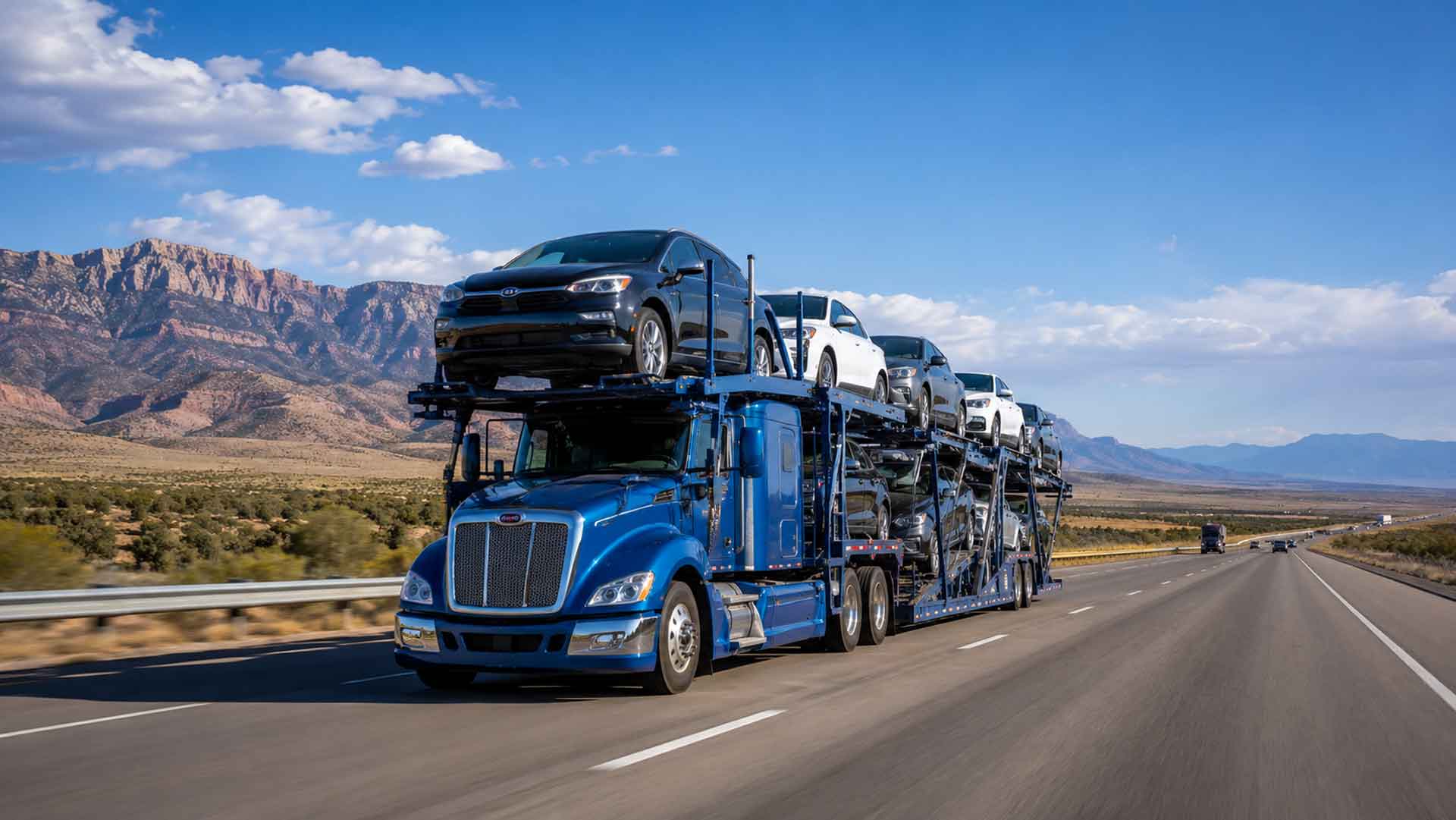
State-to-state car shipping is the door-to-door transport of a vehicle between two different states by a licensed auto carrier, instead of driving it yourself. It is the option most people reach for during a job relocation, a college move, an online car purchase, or a seasonal trip south. The reason the topic feels confusing is that no two routes price the same way: a 400-mile hop between neighboring states and a 2,800-mile coast-to-coast haul follow completely different rules for cost and timing. This guide breaks down what a state-to-state move actually costs in 2026, how long each distance band takes, and which lanes give you the best rates.
What state-to-state car shipping means
State-to-state car shipping moves your vehicle across one or more state lines on a multi-car carrier, with a driver handling loading, securing and delivery. You are paying for a seat on a truck, not for someone to drive your car on its own wheels. Understanding that single fact explains most of the pricing and timing that follows.
Carrier, broker and the role each one plays
A carrier owns the truck and physically hauls the vehicle. A broker is a licensed intermediary that matches your shipment to a vetted carrier and manages the booking. Most national bookings run through a broker because one carrier rarely covers every lane in the country. If the difference matters for your decision, the breakdown in our guide to brokers versus carriers lays out who is responsible for what.
Door-to-door versus terminal-to-terminal
Door-to-door means the driver picks up and delivers as close to your two addresses as a full-size rig can legally and safely reach. Terminal-to-terminal means you drop the car at a depot and collect it from another, usually for a lower headline price but more effort. The trade-offs are covered in our comparison of door-to-door and terminal delivery.
How much state-to-state car shipping costs in 2026
Most state-to-state moves in 2026 fall between roughly $500 and $1,950 for open transport, with the majority of routes inside the continental United States landing in the $700 to $1,400 band. Price scales with distance, but not in a straight line: the per-mile rate drops sharply as the trip gets longer.
Per-mile rates by distance band
Short hauls under 500 miles tend to run about $1.40 to $2.60 per mile because the driver still absorbs fixed loading and routing costs over very few miles. Mid-range trips around 1,000 miles cluster near the $1.00-per-mile benchmark. Long hauls past 1,500 miles often fall to roughly $0.60 to $0.95 per mile on open carriers, since the fixed costs spread across a much greater distance. This is why a 2,500-mile move can cost less than three times a 900-mile move, not more.
Sample 2026 route ranges
Real-world averages help you sanity-check any quote. Recent market data put California to Texas near $850 to $1,175, Florida to Texas around $700 to $1,190, New York to Florida roughly $1,215 to $1,315, California to Florida about $1,200 to $1,500, and New York to California in the $1,400 to $1,800 range on open transport. Treat these as reference points, not promises, because lane prices move week to week with carrier supply.
Why the same route can quote differently
Two quotes on an identical lane can differ by $200 or more on the same day. Carrier availability, how soon you need pickup, vehicle size and the exact pickup and delivery ZIP codes all shift the number. For a deeper look at the line items behind a quote, see our breakdown of what affects car shipping cost.
What drives the price on your specific lane
Lane pricing comes down to supply and demand for trucks on that exact corridor, layered on top of distance. A route with constant carrier traffic is cheaper than an isolated one, even at the same mileage.
Route popularity and carrier density
Carriers prefer lanes where they can fill every slot on the trailer and avoid deadhead miles, meaning empty stretches with no paying load. Dense corridors between major metros refill quickly, so rates stay competitive. Rural endpoints or routes that pull a driver off the interstate cost more because the truck loses time and revenue.
Season and direction of travel
Demand swings by season and direction. Northbound spring traffic and southbound fall traffic see rate spikes as snowbirds and retirees move with the weather. If your dates are flexible, timing the move around these waves saves money, a tactic we detail in the 2026 price forecast and best months.
Vehicle size, weight and condition
A compact sedan takes less deck space and weight than a lifted truck or full-size SUV, so it costs less to move on the same lane. A non-running vehicle needs a winch and extra handling, which raises the rate. Accurate vehicle details at quote time prevent a price correction later.
How long state-to-state transport takes
Plan on roughly 1 to 9 days of transit depending on distance, plus a separate pickup window of 1 to 5 days. Carriers average about 400 to 500 miles of progress per day once your car is loaded, because federal hours-of-service limits cap how long a driver can be on the road.
Transit estimates by distance
A trip under 500 miles often delivers in 1 to 2 days of transit. Around 1,000 miles usually runs 2 to 4 days. Past 2,000 miles, expect about 5 to 7 days, and a true coast-to-coast move commonly takes 7 to 9 days. These figures count time on the truck, not the wait for pickup.
Pickup window versus delivery date
A pickup window is the spread of days, often one to three, during which the assigned driver is expected to arrive. It exists because one truck serves several customers along a route and adjusts to traffic, weather and loading times. Our overview of car shipping delivery timelines shows how to read these windows realistically.
What pushes a timeline longer
Weather closures, holiday traffic, remote endpoints and last-minute bookings all stretch the schedule. Booking five to seven days ahead gives the broker time to place your car with a well-matched carrier instead of paying a premium for an immediate slot.
The busiest lanes and why they cost less
The busiest interstate lanes are usually the cheapest per mile because trucks run them constantly and refill without driving empty. High-volume corridors reward you with both lower prices and faster pickup.
Sun Belt and coastal corridors
Routes linking California, Texas, Florida and the Northeast see heavy year-round volume tied to relocation and seasonal migration. That steady demand keeps carrier supply deep, which holds rates down. California is one of the most active endpoints in the country, and our state-specific notes on shipping cars to and from California cover its quirks.
Seasonal snowbird routes
Lanes between northern states and the South fill in predictable waves each fall and spring. If your move lines up with one of these migrations, you benefit from carrier density, though you compete with more shippers for slots. The timing playbook lives in our guide to snowbird car shipping dates and routes.
Low-density routes to plan around
Endpoints in sparsely served regions, mountain towns or far rural ZIP codes draw fewer carriers, so quotes run higher and pickup takes longer. A short drive to a nearby metro for pickup or delivery can meaningfully cut the price when one end of your lane is remote.
Popular state-to-state routes in current search data
Shippers are actively searching specific state pairs, so the table below maps several of the most-requested lanes to a distance band, a realistic transit estimate and the pricing pressure to expect. Exact prices move week to week with carrier supply, so confirm any lane with a live quote rather than treating these as fixed figures.
| Route | Approximate distance | Typical transit | Pricing pressure |
|---|---|---|---|
| Illinois to Michigan car shipping | Short, roughly 300 to 450 miles | 1 to 2 days | Lower; dense Midwest corridor with steady carrier supply |
| New York to Ohio car shipping | Short to mid, roughly 500 to 650 miles | 1 to 3 days | Lower; busy eastern lane |
| Missouri to New York car shipping | Mid, roughly 1,000 to 1,200 miles | 3 to 5 days | Moderate; well served toward the Northeast |
| Michigan to Florida auto transport | Mid to long, roughly 1,200 to 1,400 miles | 3 to 5 days | Seasonal; rises during snowbird waves |
| Austin to Seattle car shipping | Long, roughly 2,100 miles | 5 to 7 days | Moderate; lower per mile but higher total |
| North Carolina to California auto transport | Coast to coast, roughly 2,400 to 2,800 miles | 7 to 9 days | Higher total; firm cross-country demand |
How to read these route estimates
Distance sets the floor for transit, while carrier density on the lane sets the price. A short, dense route like Illinois to Michigan moves fast and cheap, while a coast-to-coast lane like North Carolina to California costs more in total even though its per-mile rate is lower. Seasonality can override both, as the Michigan to Florida lane shows each winter.
A real-world route scenario
Picture a relocation from Austin to Seattle booked six days out. The broker places the car with a carrier already running that southwest-to-northwest corridor, sets a two-day pickup window, and the sedan covers the roughly 2,100 miles in about six days at the standard 400 to 500 miles per day. Requesting next-day pickup on the same lane would have shrunk the carrier pool and raised the rate without arriving meaningfully sooner.
Compare two quotes on the same lane
When two quotes land on one route, line them up on four points: the pickup window, whether door service is included, the insurance stated, and any expedite or fuel add-on. A lane like Missouri to New York can show a $200 spread on the same day, so the all-in number and the window matter more than the headline price.
Open versus enclosed on long routes
Open transport is the default for state-to-state moves and the most affordable; enclosed transport costs roughly 30 to 60 percent more and suits high-value, classic or low-clearance vehicles. The longer the route, the larger that dollar gap becomes.
When open transport is the right call
Open carriers move about 95 percent of vehicles in the United States, including most daily drivers, on the same rigs you see on the interstate. For a standard car on a long lane, open transport offers the best balance of cost and reliability. The service details sit on our open auto transport page.
When enclosed transport earns its premium
Enclosed shipping shields the vehicle from road debris and weather inside a covered trailer, which matters for collectors, exotics and anything where a stone chip is a real loss. On a 2,000-mile lane that premium can add several hundred dollars, so weigh it against the vehicle value. Compare the two in our guide on choosing open or enclosed, or review the covered service on the enclosed auto transport page.
How to get an accurate quote for your route
An accurate state-to-state quote needs four inputs: exact pickup and delivery ZIP codes, the vehicle year, make and model, whether it runs, and your earliest available date. Vague details produce a vague price that often changes later.
Use real ZIP codes, not just states
City and ZIP precision matters because a metro-to-metro lane prices differently than a rural-to-rural one within the same two states. Entering true endpoints up front avoids a revised quote once a carrier sees the actual route.
Estimate first, then confirm
An instant calculator gives a fast ballpark, while a confirmed booking reflects live carrier supply on your dates. Our walkthrough on how to estimate costs the right way explains the gap between the two. When you are ready for a live number, the TCI Logistics car shipping calculator returns a route-specific estimate in seconds.
Read the quote for hidden line items
Compare what each quote includes: insurance, door service and any expedite fee. A low headline number with add-ons can beat out a fair all-in quote on paper, so scan for the catches we flag in our guide to saving money on cross-country shipping.
How to prepare for a multi-state move
Preparation protects you on both price and damage claims: a clean, documented, lightly fueled car loads faster and gives you a clear record if anything goes wrong. Ten minutes of prep prevents most disputes.
Document the vehicle before pickup
Photograph every panel in daylight and note existing scratches so the condition report at pickup is accurate. This record is your reference point if you need to compare the car at delivery.
Reduce weight and secure the interior
Keep the fuel tank around a quarter full, remove toll tags and loose items, and retract antennas or fold mirrors where possible. A lighter, tidier car is easier and safer to load on a multi-car rig.
Plan the cross-country logistics
Coordinate who hands over and receives the keys at each end, and keep a phone reachable during the pickup window. For a full sequence from booking to delivery, follow our step-by-step cross-country shipping guide.
Mistakes that quietly raise your bill
Most overpaying on a state-to-state move traces back to avoidable choices: rushing the timeline, guessing the vehicle details, or fixating on the lowest sticker. Each one has a simple fix.
Booking too late
Same-day and next-day requests force the broker to chase whatever carrier is nearby, usually at a premium. Giving the lane several days of lead time opens it to more trucks and better rates.
Chasing the lowest quote
An unusually low quote often signals a lane price too thin for a carrier to accept, which leaves your car sitting while the broker re-shops it. A realistic market rate gets the car moving, a point reinforced in our research on cross-country vehicle shipping.
Ignoring route seasonality
Shipping into a peak directional wave without flexibility means paying the seasonal premium. Even shifting pickup by a week can land you outside the surge on a busy lane.
Frequently asked questions
How much does it cost to ship a car to another state?
Most state-to-state moves cost between roughly $500 and $1,950 on open transport in 2026, with the typical continental route landing in the $700 to $1,400 range. The exact figure depends on distance, route popularity, vehicle size and your timing.
How long does state-to-state car shipping take?
Transit runs about 1 to 2 days under 500 miles, 2 to 4 days near 1,000 miles, and 7 to 9 days coast to coast, on top of a 1 to 5 day pickup window. Carriers average 400 to 500 miles per day under federal driving limits.
Is it cheaper to ship a car on a popular route?
Yes. High-volume lanes between major metros usually cost less per mile because carriers run them constantly and fill trailers without driving empty, which keeps rates competitive and pickup faster.
Should I choose open or enclosed transport for a long move?
Open transport fits most standard vehicles and is the most affordable choice for long lanes. Enclosed transport costs roughly 30 to 60 percent more and is worth it for classic, luxury or low-clearance vehicles that need full protection.
Do I get an exact delivery date?
You get an estimated window rather than a fixed time, because one truck serves several customers and adjusts to traffic, weather and federal hours-of-service rules. Booking ahead gives the most reliable schedule.
What information do I need for an accurate quote?
You need exact pickup and delivery ZIP codes, the vehicle year, make and model, whether it runs, and your earliest available date. Precise inputs prevent a revised price after a carrier reviews the route.